Episode Transcript
[00:00:00] Speaker A: This is let's Talk ms, the podcast of youth living with Ms. Let's Talk Ms.
[00:00:17] Speaker B: Welcome to let's Talk ms, a podcast series created by Young Minds for Young Minds and proudly brought to you by the European Multiple Sclerosis Platform. We are Elizabeth and Anna and we will be your host for today.
[00:00:28] Speaker C: In this podcast series, we are about to unpack the intricacies of living life as a young adult while navigating the challenges that come with multiple sclerosis, Ms. and other related conditions such as NMOSD and Mogul. From dating to nutrition or dealing with Ms. Stigma or employment issues, we are here to navigate all true expert insights and personal stories.
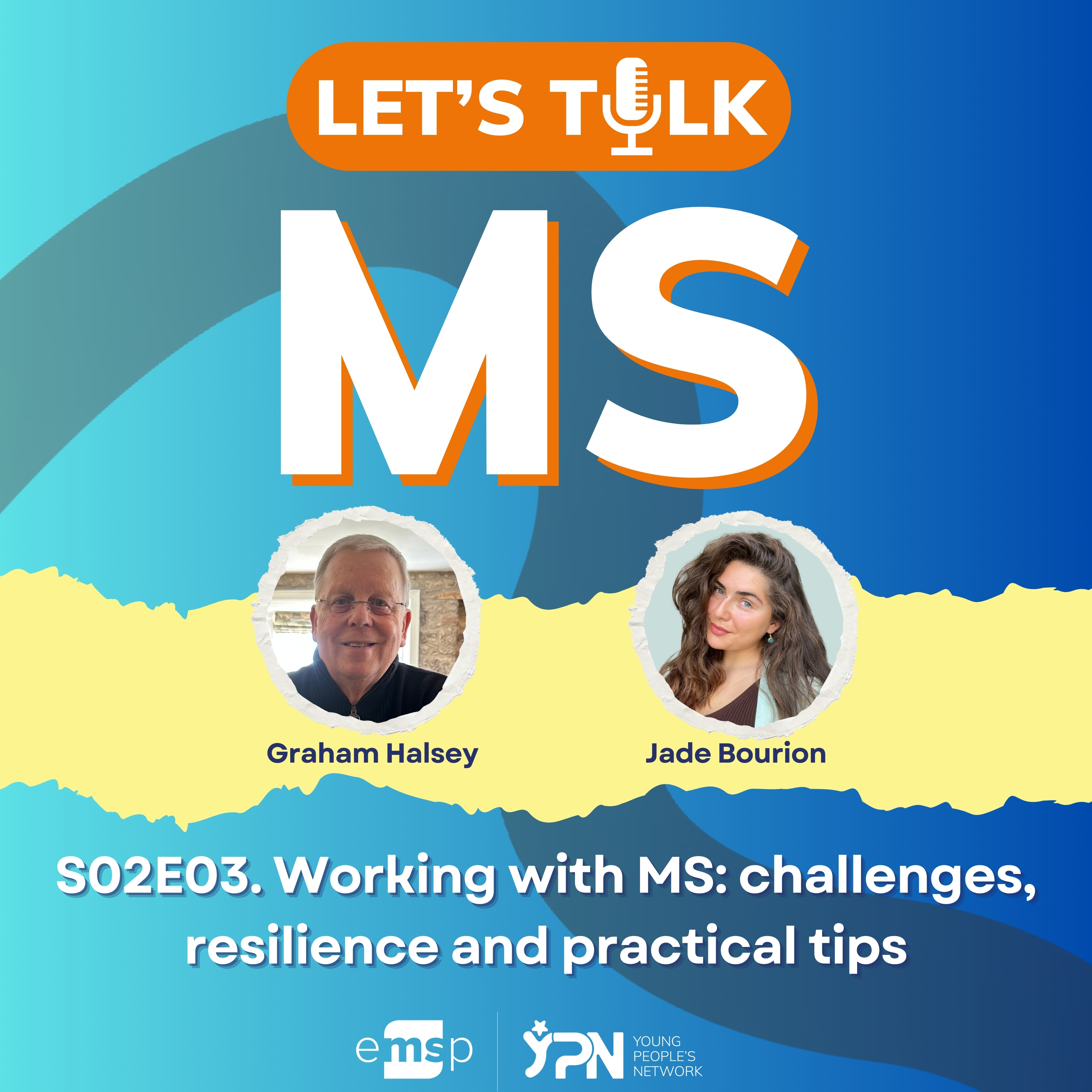
[00:00:50] Speaker B: Today we will be talking about employment, a really important topic for young people with Ms. And related conditions. To further discuss this topic, we are welcoming Graham Halsey, founder of well Working Matters in the uk, a consultancy company in the area of absence management and return to work. Welcome Graham.
[00:01:08] Speaker A: Thank you, Nice to be here.
[00:01:09] Speaker B: And we will also have Jade Burion, a Young Peoples Network member, a consultant by profession and a sports enthusiast.
[00:01:16] Speaker C: So welcome Jade.
[00:01:17] Speaker D: Thank you Anna. Nice to meet you. Happy to be here.
[00:01:20] Speaker B: In 2020, the Ms. Barometer findings showed that among the 32 responding countries, only 48% of the estimate people living with Ms. Were in employment. This figure illustrates the considerable employment related challenges experienced by individuals with ms, NMOSD or mogad. Managing energy, symptoms and health can make holding a job especially demanding. On top of that, many still experience a lack of mental health support in the workplace, limited understanding from colleagues or employers and even a stigma, especially when asking for flexibility. In this episode we will talk about what it's really like to work while living with these conditions. From deciding whether to disclose to this, dealing with everyday barriers, finding what helps and imagining how workplace could become truly inclusive and supportive. So to kick off this conversation, we would love to hear from you Jade and we would like to ask you where are you working when you were diagnosed and what was your experience like when you first started working after your diagnosis?
[00:02:18] Speaker D: Right, thank you Anna, that's a very interesting question.
I got diagnosed back in 2022. I was not working at the time, I was studying so I stopped studying and I quit my master's degree because I understood it was not for me and know when you have a big diagnosis such as ms, your whole life is in perspective and I understood I wanted to work and not study. So seven months after my diagnosis I entered the consultancy I am working at today, so FTI Consulting in Public affairs and I disclosed my diagnosis from the first interview. And I had seven interviews, so that was an interesting process.
[00:02:52] Speaker B: That's interesting. You hear that you disclosed your diagnosis from the first interview.
[00:02:57] Speaker C: Thank you, Kat, for telling us more about your experience. Sometimes we notice that for people with Ms. It's very difficult, difficult to engage in a discussion with the workplace on the topic of inclusion. And in this context today, how inclusive do you think the workplace for people with disabilities are from your experience? And what are the legal policies and framework that are in place to support employees with chronic conditions?
[00:03:22] Speaker A: I think it's really challenging for some workplaces and it's going to depend on the size of the workplace.
Some large employers will, I think, say that they can be really inclusive and often they are less so because there's a fear factor of what is it I need to do, how can I go there? And it's the support that's offered to them that can help them support somebody with a disability, somebody who needs that support. But if we come to a smaller organization, we know that there's almost no support. And the fear factor then comes in that says it's actually easier for me not to employ that person because I don't want to get it wrong. I don't want to be vulnerable to prosecution or end up in a tribunal where I'm being accused of getting it wrong myself. So we enter a field where it's difficult both for the individual who may have a long term health problem or disability to enter work. But for the employer, we have a situation where legally they are required to make accommodation, but they don't know what the accommodation looks like, they don't know how much it's going to cost them and they don't know how to go about doing it. So there's a real challenge there. And it is often easier to say we can't offer you a job because that way we don't have to address that issue.
[00:04:44] Speaker C: That's very interesting. We had this experience when we were doing the Believe and Achieve project a few years ago and we were looking for companies to have internships with people who have Ms. And the small companies, that's exactly what they were saying to us is like, how can I adapt my small company, my working place for to welcome a person with Ms. Because indeed they didn't know where to start. And that was a bit confusing. And it's a bit of pity that there are resources for those small companies or like local shops that could actually hire people with disabilities, but they just don't know how to do that. And as you said there is a cost. Is that worth it? They are putting everything. So do you think there are specific industries or sectors that are leading in disability inclusion or some that are more lagging behind?
[00:05:32] Speaker A: I've come across some organizations and I'm based here in the UK and I recently came across a very large international company that was just incredibly impressive where they have developed a culture and they've called it a culture and an initiative which they've called we are All Able. And on the back of that, they are not precluding anybody from interview or work and they have changed their interview process, they've changed their accommodation stance and they are actively encouraging people with long term health or disability issues to apply. So they as an organization, I think stand out. The irony is that it's an alcohol manufacturer manufacturing company that you could say that's kind of strange. But they are the best that I've seen. We also then come across some of the financial services companies where they have every opportunity to be outstanding and some of them are really good. But I've also come across some incredibly poor practice where they are looking to challenge people with incredibly long working hours, maybe poor support services in place. So we, we do have, I think, areas where we can see both extremes within those sectors. And then the public sector can be a challenge because they again should be able to offer and it's going to depend then on local resource and local management structures as to how they respond to the needs of individuals. So the drinks organization is the one that I've seen that is truly world class and it's one that I would recommend. But it is a challenge to then say go and work in the alcohol industry to get the best accommodations.
[00:07:19] Speaker C: If that is where it is.
I mean, it's true that sometimes we can be very surprised by the companies that are offering the right support.
And it's not to say that the sector really, I think it's important because this depends on the work, also what they have to do in the companies and how they can adjust. But also the consideration for the people is more the company leadership willingness than the sector itself. But it's nice to see that there are some good and bad example out there that we can learn from. Is there any best practice in terms of recruiting or onboarding employees with disabilities that you would recommend for people that. Because Kate was saying and she had that really nice opportunity to disclose at the very beginning when she had an interview. And do you think there are best practices that you would recommend either for the people who have chronic conditions to go ahead and ask for things at the beginning or hiring practice.
[00:08:14] Speaker A: I think if the individual feels comfortable to disclose, it allows all parties to understand what is it that we're working with, dealing with and the expectation right from the beginning the challenge comes. If somebody maybe has a period of ill health early in their employment and they haven't disclosed, that becomes a challenge for all parties. So the point of disclosure at the earliest possible time, as Jade has mentioned, I think helps enormously. But I do understand that that can be difficult to do because some organizations are not going to probably proceed with an interview process if that happens. The alcohol organization that I was talking about is interesting because they change their interview structure to be a lived interview. Allowing people to see the workplace how it functions and actually just talk through the process. Rather than having maybe gray suited individuals behind a desk where you have to portray yourself in a certain way, you can actually view the workplace and ask the questions of how could you accommodate me within this work environment? That I think is incredibly positive because it would allow somebody who does have needs for accommodation to see what the workplace looks like and then explain your needs in that real life environment. That would make a huge difference.
[00:09:36] Speaker B: It's really interesting because you said that disclosure on the earliest might be the best. Jade, I did like you. I have always talked openly about my Ms. And when applying or in interviews share it because for me it's like a mental love that I need to share to move forward on the interviewing process or the selection process. But some months ago I was one day in the hospital and I had to go sitting next to me and they were talking that they didn't disclose that they had a mess in their workplace because they were working in a supermarket and they were like why should we disclose this if the supermarket is really strict with working hours? They are not that flexible with us. So they said that disclosure wouldn't be the best option for them. So that made me think of a compared to my experience and just it made me think about the disclosure in general. That's why Jade, I wanted to ask you why did you choose to disclosure in the first interview and how did you approach that conversation?
[00:10:28] Speaker D: So I chose to disclose because I knew that I was entering consultancy and consultancy is well known to be long hours, very draining of energy. But also because very frankly I don't want to work for organizations that don't understand how I'm going to like what my needs are going to be and how I'm going to function. I prefer honest. So disclosure but also honesty about how I work, how I might not work in the future because of Ms. So that everyone is on board and that there is no secret. Because I just, I don't like to feel that I have to hide something. I'm a bit like you on that side. But I was very, very lucky because my previous boss, she had her best friend that had Ms. So basically when I disclosed, she totally understood the challenges and what we needed to do. And she put in place jointly with me and with my manager a specific system that is called color system. So you have the green color, yellow and red and those colors are according to my current state. So basically I have a specific group on teams with my managers where I disclose if I'm green, if I'm yellow or if I'm red. And that helps them understand which tasks they can give me. Because when I'm green, basically you can give me everything yellow. It's just the tasks that are like long term due. So no very urgent deadline and no thought process, no strategic process. And then red. I might still connect but to do my own thing. And otherwise I'm just going to be off for a few few hours, for a few days. But I will keep you updated. But this was put in place for me and this was a pilot because they didn't have any disclosure before. I don't think they had any handicapped people before me actually. So this was the beginning of my career in a very big corporation. And then now the system has moved because the company needs are moving as well. So I can also explain a little bit more how I work now and how other people that have handicaps in the company use the system. But that might be a bit too long for that background.
[00:12:21] Speaker B: It's really interesting to hear that from the beginning you had this option. I guess that it's related with what Graham was saying that maybe larger companies have more options. But it seems like from my point of view that I'm not an employer, but it seems like an easy win that it's not that difficult to implement and people living with Ms. Or related conditions or disabilities in general could really benefit from. So really interesting and happy to hear that this is a real story and that this is happening.
[00:12:48] Speaker C: Thank you again for this because I think this is a great example of how can do we always think, talking about policy change, that we need to encourage the companies or the employers to change their internal policies, that we need to work on the systems because the systems are not fit. We have legislation that are not implemented. But there are some easy wins that the employers and the companies can do easy steps that doesn't require lots of money behind. It's not costly to have have in the company newsletter or mailing to the employees about chronic conditions, raising awareness, sorry on different conditions that can help the employees to destigmatize a little bit. The understanding and the relations with the colleagues might be easier.
And I was thinking again, if you have maybe Graham in the way like we've seen that the company's employees create some internal policies on how to do things and how to help the transparent on the inclusion policy. Do you think there are some recommendations that can be made there for the employers for the easy steps and not go straight ahead with big plans, but start small and help rolling the ball?
[00:14:05] Speaker A: I think we run the risk of over complicating what is in fact a really straightforward process. And to me the process is owned by the individual because we all have different needs. We can all have the same diagnosis, but all have needs that are completely, completely different. And so the allowing the individual to own what is their need. And one of the things that comes to mind, and I've seen it being used really successfully in large business and sadly it has been large business again is to incorporate something called a health passport to allow the individual with Ms. Or associated conditions to be able to have a document that they can use to explain their condition. It is their document. What is the condition? How does it affect affect me and what are my needs within this? That is going to cost the organization pennies to set up and have within their structure. But what it does do is give the individual ownership to be able to take to their manager to HR and say this is what you can do for me, the accommodation, the education and the message that goes to colleagues can all be shared from within this document. It's really straightforward and to someone who's worked in this area for many years, it really easy to implement. You know it. It should be straightforward if you have the company who've got a willingness to work with you. So I think, you know, there is a small step that can start to implement that but it's got to have that buy in from I think the HR community within the company to say we want to recognize that individuals have individual need. We can't just give a global policy for this.
[00:15:52] Speaker C: Yeah. And do you see that there are some future trends or innovations that can be mentioned? Where do you see the future in the field of inclusion? I know it really depends on the country where you are or the places. But do you feel that There are some trends because the work, actually the concept of work has changed a lot after the pandemic. It's not like before. We've seen that even during the pandemic, the companies, the employers, changed our practices fast and they adapted to the context we were living in at that period. And those practice at that time actually benefited the people with chronic conditions.
There was the working from home policy. There were like the flexibility on the times, on the hours. There are so many things that was easily and fastly implemented. Is that the future we are looking at, the flexibility? Do you think that there is some changes in the current environment that will benefit the people with chronic conditions?
[00:16:51] Speaker A: I think so. I think you're right. If we look back to the pandemic and that rapid move to work from home, I think it was needed, it had to happen.
Was it maintained?
I'm not sure. Was it well done? In some cases, yes, it was. In other cases, people were left to be at home and flounder because there was no support.
But if you look at a good model of maybe hybrid working, whereas some you can work from home some of the time, you can engage with colleagues in the office some of the time, I think that's a very strong model to consider and that's one that I'm seeing happening more often. There's been some really poor experience of employers who have said, you work from home and we've sold off our state, so you no longer have a base to which you can reconnect with. And that's been, I think, quite challenging for people who I think feel quite isolated and without a base to touch again in the future. But if there is a hybrid model of work that seems to be very powerful and allowing people to maybe come into an office and agreed one or two days a week, but allow people to work from home, I need to sort of add into the work from home, though, that we are learning that people work from home badly at times and sort of maintaining sort of strong work culture, not just working unrealistic hours and things. So we need to regain some control on that. To say, you know, your contracted hours, how are you going to work? And if you're working from home, we need to ask employers to provide reasonable equipment by way of desk chairs, computer equipment. It is not good enough to give people a 14 inch laptop screen and say, there you go, you're set up to work from home. That cannot be sustainable. And too often I've seen that happen. So if we're doing it particularly for somebody whose fatigue is going to be a problem whose vision may not be as good as you would hope. We cannot expect that to be sustainable for long periods. So we've got to expect, if we're taking away the office space, we've got to give the right equipment for home. That would be, I think, good practice and that would fit in well with people being able to identify what their needs are from home as well as they could have done from an office space.
[00:19:09] Speaker C: Yeah, that's indeed, that's true and I totally agree with that. The employer needs to support like the workplace or station at home as much as they would do when they are in the office. It's very important and the working hours, obviously the control of that discipline, of this to have some safeguarding so that people don't overdo it or don't feel obliged to overdo it again. The digital world might be also a challenge for people with chronic conditions to just like, know when to, to stop and be able to reasonably explain that now it's screen time is over.
Jade, do you want maybe what would you do you have any take on working from home? Because from I guess from your consultancy perspective, you are working from home.
[00:19:55] Speaker D: Yes, exactly. That has been a game changer for me. I might be a little biased because I am working from home a lot, practically five days a week these days, because one, it's enabling me to do sports during lunchtime. Second, I can just cook great meals and have all my supplements and not have to pack everything in a big bag that I have to take on the bus or the bike to go to work and then just lose time and have heavy weights on me. Also, in terms of daily pain and chronic pain, if I'm able to be in my sweaters and in my big PJs, if I don't have a client call, obviously that helps me control my bladder, not have that much muscular pain, etc. Etc. And also be less tired, very honestly, because I can just wear, wake up.
I usually wake up early, but I can just wake up, take my time, have a proper breakfast, have a shower, be on the, you know, on my computer and just take the time. So I'm a huge advocate for working from home, but I also like to see my colleagues, obviously. I think that what you said, Graham, about the fact that the socializing part, right, the fact to not feel too lonely is very important, but indeed working from home for me is definitely extremely important. I would not be able to go to the office five times a week, that's for sure. So that is Very important. I'm very lucky that in my company they allow me to do it. Even though, you know, in the last few months we've seen also a tendency for big corporations to ask their employees to go back to work. So I don't know what's your take on this Graham? Because this has been quite a big issue I think also for people that have different needs obviously because then they need to readapt to a very business office space office hours you not just go whenever you want to go work from home. So yeah, I'm still in the work from home game for now and I hope to stay like exist and yeah, it's definitely extremely important.
[00:21:45] Speaker B: Jade, I completely agree with you that it gives you more, I would summarize it like more mental piece because you know that everything is easier. But honestly I like the combination because I love to work from home because for me it's important that I can sleep a bit more as I have a lot of fatigue. But then it's also nice to go to the office and meet the colleagues and well, it's a different experience. So the combination of both is perfect. But it's great to have the flexibility possibility to choose whatever you feel more comfortable to do on the same day because some companies only offer like one or two days per week and it's fixed. I used to work in a pre, I used to have another back home I had another work and it was only Thursdays so on Tuesdays I was not feeling well. Of course I could negotiate it but like extreme cases regularly I had to go to the office. So yeah, working from home or having this flexibility, it's great. And Jade, what advice would you give to young person with Ms. Looking for the their first job or considering a career change?
[00:22:43] Speaker D: I know it's up to each and everyone to choose to disclose but eventually when you have an illness, just as Ms. Or any other chronic disease that can just where you know your life can change from an hour to the other, not disclosing it will from my experience and the experience of people I know that have Ms. And did not disclose it, it will bring you more issues in the end because first of all you don't want to work for a company that does not respect you as an individual. If you ill, that's one and second, if then unfortunately you have a crisis or symptoms and you have to explain it to your boss and you cannot say you have Ms. In that case it's a bit complicated because it's not a flu, it's not a cold you cannot say, rest well, sleep well and it will get better tomorrow. No, that's not. We know it's not how it happens. Right? So I understand why people choose not to disclose it, but in the end I think it will bring you more problems for your reputation, for yourself, your mental piece, as you said, Anna, as well. So just disclosing, knowing your words, I like the idea of the health passport, Graham, because that can be very business minded, right? So you're like, okay, this is what I have, this is my need. You can help me like this, I can help you like this. And that's easy, super easy conversation. Everyone agrees, that's it. And it's not emotional, it's not crybaby. Companies don't like that. Right. So really like that idea. So, yeah, to answer your question, Anand, I would just say, listen, just be self confident you're gonna find a job that you want in the team that you want, that really respect your Ms. And that's the most great.
[00:24:16] Speaker C: Thank you. Jade, do you want to respond to that, Graeme? Maybe.
[00:24:19] Speaker A: I think I agree, Jade. I've seen some figures that might scare me that somebody with a disability has to apply, I think seven times more jobs than somebody without a disability to land the successful job. But it is a case, I think of if you can be upfront and be clear about your needs and takes away some of the fear factors for the employer, if we can almost deal with that partnership approach, I think it will help enormously. Employers are, you know, contractually in the uk, they have to employ the best person. And if you can be the best person on the day, look for the jobs that suit you and apply with confidence for that. Don't allow your disability to get in the way of you applying for the job that you are good at and you can do, but be open about the help that you need. That shouldn't then stop you getting the job. That would be my point, I think, you know, hold on to the confidence that you should have.
[00:25:19] Speaker C: Thank you, Graham. That's a very nice message here for our audience. Just apply with confidence.
And we know. And that's quite a striking numbers that you are giving here. Seven times more applications for someone.
For people with disabilities, it's quite important we know that for other people it's already a struggle. So I guess for people with disabilities that's I think, a message also here for our audience and for the people that are working with people with Ms. Or any other chronic condition is like they need to find allies along the way that can support them Support them in the application process, support them to prepare the dialogue when it comes to that with their employer. It could be at their hiring time, it can be later on when you are diagnosed already in employment. And it needs to be a continuous discussion. I guess it's not a one point. There should be check ins available. And I think I love this traffic light system. Like there is a regular communication with your employer that says okay, today is not good, but I am here and I'm able.
And I love this message that we are all able that you were saying at the beginning. It's really nice. This is it. So it's about for the employers to tap into the abilities of the people, whatever that is. And it's about identifying this and being part of the journey together with the people. Having said that, one last comment I have on the overall because we know that European level there is a lot of discussion of so about the equal treatment equity and how to make sure that we we are fair and inclusive but at the same time we see down this trend to kind of cut down on some of the things or be a little bit more conservative on improving these social rights of the people here. I would ask both you, Graham and Jade if you have one key message for those policy decision makers that do not want more improvements, that are a little bit more shy on impro policy change were relevant. What would you like to tell them?
[00:27:27] Speaker A: I would say that you are missing out on the biggest untapped point of skills and talent that you have in your community and don't be frightened just because someone is asking for something different. Access it, use it because you will not regret it.
[00:27:46] Speaker C: Nice message. Thank you Graham. Jade.
[00:27:49] Speaker D: Actually everything said, Graham said it all I was going to say except that differences make up society. So that's the exact same really. So depends on which party is the MEP from obviously.
But yes, that's definitely an untapped environment of people. So yeah, thank you for saying that.
[00:28:08] Speaker C: I think we will steal that quote and push our policy decision makers to take the right decisions because we need to keep moving forward and look in the future, a better future for people with chronic conditions like Ms. And other related conditions.
So I will give the floor to.
Now let's prepare a little game for our guest today, Edna.
[00:28:32] Speaker B: Perfect. Thank you Elizabeth. So unfortunately we are arriving to the end of the episode but before we leave we will play a small game called Rapid Fire Q and A. So you have to answer with the first thing that pops in your mind. All answers are perfect.
So first question I'M laughing because this question was suggested by Elizabeth, because I think this is, at least from my point of view, this is a really Belgian thing. So what do you prefer, a sparkling or a stage still water Parking.
Good answer. I'm getting used to that. Sometimes in Belgian tables you have both bottles, so you need to be careful. Which one do you want to drink? Because I don't like sparkling water. So. And I come from Spain and Spain I think sparking water is not that. I mean of course there some people drink sparking water, but not that common. So nice to hear this. So next question. Coffee or tea during winter work?
[00:29:25] Speaker A: Coffee.
[00:29:26] Speaker D: Coffee. Oh, interesting. Foreign English.
[00:29:31] Speaker C: I am all for tea.
[00:29:33] Speaker B: I'm also coffee person. Another interesting question, telework or office Telework. We knew your answer, I think.
And for you, Graham?
[00:29:43] Speaker A: Telework.
[00:29:47] Speaker C: But that's because I live very close to my office.
[00:29:50] Speaker B: That helps.
One thing that makes a workplace inclusive, deep listening.
[00:29:56] Speaker A: Yeah, I think listening, I would agree, is the.
[00:29:59] Speaker C: Yeah, yeah, I think the safe environment. Knowing that you're safe. Whatever you're going to say, you're safe. I think that's reassuring and makes open the doors for inclusivity.
[00:30:08] Speaker B: And one last question, one small change that can make a big difference in how you work.
[00:30:12] Speaker D: Oh, that's interesting. Graham, please go ahead.
[00:30:15] Speaker A: Flexibility.
[00:30:17] Speaker D: Yeah, flexibility.
[00:30:18] Speaker B: Okay.
[00:30:18] Speaker D: I'm happy.
[00:30:22] Speaker C: We think about maybe less digital. I think now it's too digital. We are like hooked to our teams and our Microsoft and Outlooks and I think couldn't help just have one break in the day where you don't have this.
[00:30:36] Speaker D: Yeah, that was sport.
[00:30:38] Speaker B: That's what I wanted to say that it's amazing that you can do some sports in the lunch break or during the day.
[00:30:44] Speaker A: Really impressive.
[00:30:45] Speaker B: But. Well, that wraps up this episode of let's Talk Ms. A big thank you to you Graham and Jade for sharing your all your expertise and experience sees and as Graham said, remember to be open about the help you need. That's super. An important and powerful message. At emsp, we have done a huge work in employment such as the Practical Toolkit Working at Ms. In the Workplace. A practical Toolkit for employers, Offering guidance to employers on workplace adjustments and recruitment. Inclusion of people with Ms. You can find more resources in the link to the episode. If you enjoyed if you enjoyed this episode, please share it with your peers, friends and family. Don't forget to subscribe to our podcast channel to stay updated on upcoming episodes. In our next episode we will be talking about nutrition. Another important topic for the Ms. Community. You can also follow us on Instagram and Twitter Ms. Youth. Thank you so much for listening today and until next time.
[00:31:38] Speaker C: Bye.
[00:31:44] Speaker A: Sam.