Episode Transcript
[00:00:00] Speaker A: This is let's Talk ms, the podcast of youth living with Ms. Let's Talk Ms.
Let's talk about.
[00:00:17] Speaker B: Welcome to let's Talk ms, a podcast series created by Young Minds for Young Minds and proudly brought to you by the European Multipolar Sclerosis Platform. We are Elizabeth and Nano and we will be your host for today.
[00:00:29] Speaker C: In this podcast series, we're about to unpack the intricacies of living life as a young adult while navigating the challenges that come with multiple sclerosis and related conditions such as NMOSD and mogat. From dating to nutrition or dealing with the mass stigma. We are here to navigate it all through experts insights and personal stories. And thank you for our guest to be with us today.
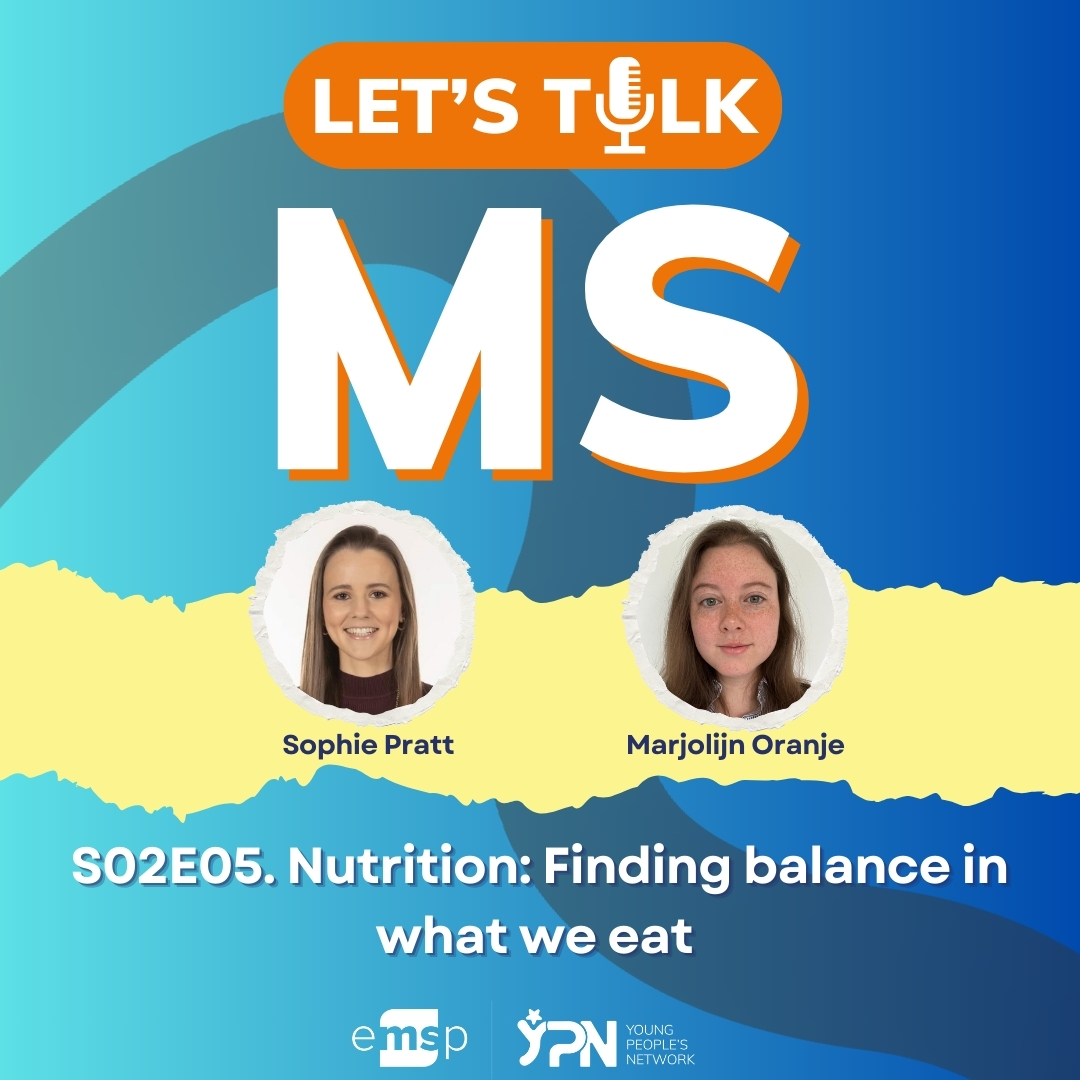
[00:00:54] Speaker B: In this episode, we will talk about nutrition and the impact it can have in conditions such as ms, NMOSD and Mogados. But before starting, let me introduce our guest for today, Sophie Brad, dietitian and a member of the Irish Nutrition and Dietetic Institute. Based in Ireland. She works with a diverse range of clients and contributes to media platforms such as radio and television. She's an expert in weight management, fertility, health and eating disorders and also designs specialized diet interventions for individuals including those with Ms. So welcome Sophie.
[00:01:28] Speaker A: Thank you very much.
[00:01:29] Speaker B: And we will have Mariole Orano from the Netherlands and member of the Young People's Network. She works in banking and discovered that she had Ms. Five years ago while living and working for the first time abroad. Ever since, she has tried adapting to life with Ms. As best as she can whilst continuing traveling and working in different countries. Welcome Marion.
[00:01:51] Speaker D: Thank you.
[00:01:52] Speaker B: Nutrition is often a topic of discussion when addressing Ms. And related conditions.
We each have our own experiences and advice and there is a wealth of information available online. In reality, there is not a single Ms. Diet, although experts and scientists agree that maintaining a healthy diet is important for long term health.
Today we aim to provide a clearer picture of how healthy habits can support life with ms, inflated conditions and lead to an improved quality of life. Sophie, we will start with you. So to kick off the conversation, could you tell us more on the role of nutrition in conditions like ms, NMOSD or mogat?
[00:02:31] Speaker A: Absolutely. Firstly, I just like to say thank you very much for having me on. So there is a huge, huge role to play in terms of nutrition and that link between Ms. However, I would like to say that there's no causal relationship. Okay guys, so when I say there's no causal relationship, I mean that nutrition can't cause or lead to Ms. And similarly nutrition can't cure Ms. Or similar conditions. Okay. But it does have an incredibly important role to play. So there's a number of methods that we can look into in terms of how just important nutrition is in ms, and the first of which is disease progression. Okay. So when we're thinking about Ms. And we're thinking about kind of relapses and things like that, if we alter our nutrition to reduce the relapses, that can be incredibly beneficial. And then obviously, obviously as kind of the disease I suppose progresses, we're trying to reduce that impact as much as possible. So number one is nutrition and that, that kind of association with the disease progression. Number two, then if we look at weight management, okay, so I suppose obesity puts not only those with ms, but I suppose all individuals at an increased risk of, yes, severe health issues down the line. So when we are an individual with ms, we don't want kind of the obesity related issues in terms of kind of mobility and joint pain, inflammation, all that stuff. So maintaining a healthy, balanced kind of diet and in tangent with that weight is incredibly powerful. So number one, your disease progression, number two, your weight management and then moving on, number three, if we look at our cardiovascular risks, so unfortunately those with Ms. Are at a greater kind of risk in terms of our cardiovascular health, so our heart health. So nutrition plays an incredibly important role in terms of the types of fats that we're consuming to promote our heart health. So if we, if we can manage that and we can I suppose give the heart the foods, the healthy foods that it needs to nourish the body, well, then it can prevent and reduce the cardiovascular risk in those with Ms.
If we move on and look at another area, we're talking kind of inflammation. So I suppose the key thing within Ms. Is to reduce the inflammation in the body. You know, we want to try and just minimize that as much as possible. And there are key nutrients, there are key foods in the diet that we can do that known as anti inflammatory foods that we can try and eat as much of as possible. Within reason, we still want to enjoy food. So I suppose reduce the inflammation is an important kind of marker and really important for those with Ms. To include also. Again, I know guys, there's so many points involved here, but it just kind of shows the power of nutrition in Ms. In many different ways. So if we look at, I suppose the fifth point there in my head, just to kind of keep them in bullets, it would be our nerves, you know, the myelin sheath. Obviously we need to try and promote our Kind of nervous system and vitamins, minerals, particularly B vitamins, can be very helpful for that. So nutrition, nervous system, incredibly important.
Number six, immune system. So for anyone with Ms. And anyone at all, I suppose our immune systems are our defense mechanisms. You know, they are our little fighters. They will help us keep us safe and healthy. And what we need to do in terms of our food is promote our immune system and give it the healthy gut bacteria, give it the, I suppose, the tools to help fight off those nasty kind of diseases and things like that. So our immune system and nutrition are closely linked and are very important within Ms. Also, if we kind of, I suppose, take another step from that, there are certain diseases that are, I suppose you're at increased risk of when we have Ms. Okay. Diabetes, thyroid disease, things like that. Bone issues as well. So if we look at those types of diseases and kind of take a step back and think, how can we stop developing or reduce the risk of developing these diseases through our food? For example, in diabetes, carbohydrates would be the main component that we're looking at.
So bread, rice, potatoes. As I'm from Ireland and we eat a lot of those, okay? So the carbohydrates, they be kind of the nutrient that we'll be focusing on the most when it comes to reducing the risk of those diseases.
And then we're talking about our symptoms.
[00:06:57] Speaker D: Okay.
[00:06:57] Speaker A: So the first thing that I will say, and it's probably the most powerful approach that I found in clinic, anyway, working closely with those with ms, is everyone's symptoms are so different. And like, managing and adapting our diet to help your symptoms, to help those individual symptoms, is probably the most effective and I suppose most liberating for those with Ms. You know, we don't want to be having certain symptoms, be it bowel issues, eye issues, sexual issues, whatever it is, do you know that all kind of inhibits our quality of life. So nutrition can help manage those symptoms. And that's the one that I would really love everyone to kind of just take note of a little bit more because it can be incredibly powerful. So a whirlwind, probably too much information there, guys, but just shows us the massive link between food and Ms.
Wow,
[00:07:47] Speaker B: you gave us a lot of really, really interesting information.
And I have to say that I love what you say at the very beginning is that nutrition cannot cure Ms. I think that's an important message because at least what happened to me when I was diagnosed, I started to look for more information, and I was reading a book that about Ms. And nutrition. And they were talking about cure, how the cure. So I think and I, I stopped reading that book because I, it didn't have, I, I couldn't read it because I knew I didn't believe in the cure through nutrition. So it's great that we have a nutritionist here today talking on this and wow, lot of interesting and insightful information.
So I, I wanted to ask you, you mentioned the symptoms management. So could maybe could you share with us like some of if you had any patients specific severe symptoms like fatigue or a lot of inflammation with that was creating other symptoms, how the nutrition helped them?
[00:08:46] Speaker A: Absolutely, I'd love to. So yeah, probably fatigue would be the, one of the most common ones and the first I suppose approach I would take and I know it seems so simple but it is structuring your eating pattern. So they may have come in for example had an individual who used to, I suppose had a poor appetite, used to only eat maybe once or twice a day and kind of force feeding themselves because they felt obviously food is fuel, I have to get something in. But it was kind of just maybe sporadically throughout the day. There was no pattern. The individual was getting I suppose incredibly fatigued to the point that they could no longer function. As in had to lie down, had to take a nap, couldn't actually was not able to do kind of daily tasks. So we, we structured in four to five, I suppose I call them eating occasions because if I say meal people might perceive it as a huge big mound of food. But at eating occasion where we're just simply eating something. So four to five eating occasions during the day and then trying to balance those meals. So when I say balance the meals, I mean include a source of protein, include a source of healthy fats, but most importantly include a source of carbohydrates. Now I know I'll talk about it down the line because there are those diets out there in terms of ketogenic and kind of swank paleo, all those ones that are probably very, very trendy and common. But in terms of the evidence base they're, they're not highly backed. So I absolutely advise that we get some form of carbohydrates in there because carbohydrates are our main source of fuel. So once we have the four to five structured meals it means that our blood sugars are level, we're not going to dip too much, we'll have a little bit more energy, we have the carbohydrates in there and then not to completely lose you guys B vitamins okay, so B vitamins are incredibly important for energy metabolism. Okay? So when I say B vitamins, people are like, where do I get B vitamins? Okay, so it's, there's, there's many different sources, but the carbohydrate sources are probably our best bet. So the likes of your oats, your quinoa, your bulgar, wheat, semolina, pasta, bread, rice, any of those things, they're laden with B vitamins. So three things to remember. When you're talking about fatigue, you're talking about your eating pattern, you're looking at your balanced meals and you're talking about your B vitamins. So that's just fatigue. I'm thinking in terms of kind of our bowel issues. So I had another individual there who was really, really struggling in terms of their bowel habits. And it can go either way, depending on kind of treatments, depending on different kind of medications, things like that. Also anxiety, stress, a person's mental health can, can really impact their bowel habits as well. But anyway, long story short, the individual was struggling in terms of constipation, so there was a lack of mobility there already. That's not going to help because when we move, it squeezes our kind of digestive system and it helps us kind of, I suppose, excrete, but that mobility wasn't there. And then our diet was really, really low in fiber, so it was kind of, it was pushing us towards constipation, which is, if it is not great. So when we're talking about constipation, we need fiber, but we need to match that with fluid. Now, in some individuals there can be bladder issues, so the fluid gets a little bit tricky because we might have a cut off of fluid throughout the day, but this individual didn't have a cut off. They were fine to drink whatever they wanted, which is great. Long story short, again, we increased the fibre through whole grains, beans, vegetables, kind of fruit where possible. So if they could manage that volume, great. We had to kind of cut it in certain areas and then that coupled with the water meant that we were now getting a little bit more regularity with the bowels. So that's just two instances fatigue and bowel habits. And straight away we can jump in with the food and just alter things slightly even without kind of any other lifestyle factors like physical activity or anything like that. I hope that answer your question, Anna.
[00:12:31] Speaker C: That answered a lot of the questions. Thank you very much for this, Sophie. It's really insightful and really gives very practical recommendations. As a young person living With Ms. Mayoline. I was wondering, when you hear that all these recommendations and all these practical things, can you tell us more a bit. What was your experience after your diagnosis? Did you make any changes on your diet?
Have you been noticing any connection with your diet and your symptoms?
[00:13:01] Speaker D: So first of all, I fully agree that for me, nutrition and diet really helps with the main Ms. Symptom. I think that a lot of us have, which is energy management. I did indeed make some changes after my diagnosis. I think, Sophie, you mentioned people with Ms. Have a higher risk, for example also thyroid disease. I had those diagnosis in parallel. So I was already looking into making some changes in my diet. And then on top of that I also had my Ms. Diagnosis. So what I did, for example, is I tried going gluten free and dairy free for a little bit and I noticed that especially gluten free for me made a really big difference. But on top of that, I also tried to be really conscious of, okay, if I exclude certain things, what do I need to bring back in? So the whole balanced diet for me, really, that's the recommendations I've heard from the beginning and that's what I try to stick by. So indeed, a well balanced meal, where you have a little bit of everything on your plate, something that will keep you full for longer, will give you energy throughout the day. Because I do realize that if I skip a meal or push a meal to a few hours later, I might sort of have a crash later in the day and wonder why is my energy low? What did I do? And I was like, oh wait, you pushed your meal three hours back so your body was overcompensating there to sort of stay standing to get you through the day, but you're going to pay for it at the end of the day. So for me, energy management is a really good example in terms of I have three structured meals a day, maybe some things in between if I need to. But for me, the structure in between is really important to get through the day and do everything I want to do in the day and maintain as best of an energy as I can.
[00:14:25] Speaker C: Yeah, I believe when I hear what Sophie is saying and when I hear you, there's a lot of discipline. Like when we are talking about nutrition, it's preparation, it's knowing. So first of all, looking for the information, knowing your, your health, knowing your body, and be a discipline to follow through to the recommendations. And sometimes it can be difficult to change your eating habits to find new food that you like, swap the food for healthier food so how did you manage that in terms like changing your habits and be a little bit more disciplined in the way you are dealing with the food?
[00:15:03] Speaker D: So I think in a sense, maybe, I don't know if I would call it lucky, but I had my diagnosis in the middle of the pandemic, so I had a lot of time on my hands. So when I made these changes, I was working. And other than that, I had all the time to spend in the kitchen, experiment a bit with cooking, see what I could make for swaps. I had time to go to the market, get my fresh produce there. So I think that helped. And because I had the time, I built certain habits that I'm still taking with me now. Even though life is a lot busier, I have a lot more responsibilities and things in my agenda. But I think some of the, say, the recipes and the experience I take from there, I still have, but I still had to make changes because I don't have time to cook three meals a day anymore, not with everything else I want to do. So I think for me, planning is something that had to come in afterwards. I built the habits, I built the experience, but I still had to learn to adapt. Okay, I'm living in a new country now. I have a different job. I want to do more things on the side. Maybe I do most of my cooking in the weekend and during the week when I work, I'm not expecting myself to cook three full meals from scratch. There's something in the fridge that I can come home to. I warm up in the evening, which is already a healthy, balanced meal. And that's the ideal scenario. I'm not saying this works every day, certainly not, but this is how I try to, to keep it up and maintain it.
[00:16:15] Speaker C: So the, the key is not to wait for another pandemic, but maybe to plan better.
To plan better and take time. And this is something that we, and I often say I don't have time, but time is not going to appear in front of you. You have to make time. So for all the important things, and I think that's one of the key points here, is really take the time to understand first and learn, but also to prepare and the time for eating, the time for preparing cooking, it's also something that's self rewarding in a way and it's also self prioritizing. So it's important to say, like when you are cooking or eating, just like focus on that moment. It's something that you deserve. Basically, we forget a little bit about this with seafood, like as you were mentioning before as a fuel. No, it's more than that. It's part of us and it's really important that we do that better. Then we are not educated enough on that front for sure. Building on this, maybe for Sophie, do you have any advice for the young people, like when they are developing this healthy eating habits, how not to feel overwhelmed or becoming overly focused on food? Because then that can also have a reverse effect.
There are so much different diet supplements out there that people kind of try randomly because they feel that they have to lose weight or they have to manage better, but they are trying things and then jumping from one diet to another.
So what could be helpful generally for them in that process?
[00:17:51] Speaker A: Yeah, it can be extremely overwhelming. And I would always suggest straight away from the get go is to literally just sit down, take a step back, just take a deep breath and think, okay, well this is what I'm dealing with. Now, I obviously have certain symptoms or you may or may not have a huge amount of symptoms. But anyway, regardless, we need to follow a healthy balanced diet. And if there are one or two symptoms that we need to look at, well, let's do that. We don't need to jump. And I mean, it's in the most respectful way, Marilyn, in terms of kind of the. We'll say dairy free, gluten free, cutting out, omitting, like all of these things. We don't have to do them straight away, we don't ever have to do them. Or if we do want to do them, we can discuss it down the line. But as a first kind of approach, I would always say let's just tidy up our diet in terms of a healthy, balanced approach. So literally have a chat with your mum, your friend, a dietitian, whoever it is, about what you're eating at the moment, structure it, get a couple of healthy foods involved and then try that for a period of three to four weeks and just assess our symptoms. Some people may find it beneficial to use a food and symptom diary. Now, it doesn't work for everyone, I will say that. But for some people it can be incredibly beneficial because if there's foods there and maybe it's causing a little bit of tummy upset, or maybe we're getting a little bit kind of, I don't know, the mood is super low after the four weeks and we're just seeing that association with the food and the. On the symptom diary, it can be helpful, but we don't need to obsess about it too much. You Know, like you're saying there, Elizabeth, it can become the sole focus, you know, and we shouldn't really be be focusing on food to that extent. Of course we love food, we want to enjoy it, but it's just, it's of the process here. We're using it as a form of a natural. We'll say medication, you know, it's a natural form of medication that, that we just need to structure into our lives again. So if we sit down, we have a chat about the basics of a healthy balanced diet. You do up your shopping list, you write what meals you're going to have, you keep a food and symptom diary and then you do that for a period of four weeks and review. So it's not doing anything out of the ordinary.
[00:19:54] Speaker C: I've been diagnosed with the chronic conditions and you know that nutrition can have an effect.
Do you think that it would be worth starting with like a proper review with a, like a proper blood test to see what's grown, what needs to be adapted in your like, body? Or do you think that switching directly to a healthier habits and diet would be the best recommendations? What would be the, the best way to approach that in a. Not like, let's randomly try anything because we know it's better and it's healthier.
[00:20:25] Speaker A: Yes.
[00:20:25] Speaker C: What would be the best approach generally?
[00:20:28] Speaker A: Well, what I would anyway advise as part of our assessments is that we do a full nutritional assessment and we could to do a diet history. So basically I would ask you what you eat and I could kind of pinpoint a couple of nutritional markers that might be deficient or might be on the lower end and we could work on those. However, I would always. Because it's great to have the backup of a nice little blood test to know, okay, well, vitamin D is, is within range. My iron levels are fine, my V vitamins are fine. It's okay. But like, I suppose you have to heed the advice of the gp. I wouldn't go straight to every medical kind of intervention that you have to do straight away. It would be absolutely a bit of a nutritional assessment with the dietitian and then they would likely ask our GP to just have a quick review as well and potentially get a blood test. But again, sometimes we can become obsessed and over focused and literally try and solve everything within one day and it can become incredibly overwhelming. I don't know, Marilyn, if you ever experience that one day of pure, just feeling completely overwhelmed.
[00:21:28] Speaker D: Absolutely. Yeah. I think that's. Every now and then a day like that will just Happen you haven't prepared, it's a busy day or you had everything under control and one thing happened that you did not foresee in the day and everything derails. Absolutely.
I think it's, it's part of life with Ms. In general.
[00:21:45] Speaker B: Yeah, yeah. But I think that, Marilyn, what you said before, that you try to plan it really helps to deal with the week or at least for me, it's really important on Sunday to have at least two hours to do batch cooking. I am the queen of batch cooking. So I know that on Monday morning I have not the meals of the full week. Of course, I mean sometimes, usually I need to prepare the protein the same day, but I have like two or three meals that are like my star meals that maybe I'm a bit repetitive, but I know that they are healthy, that I like them and that they don't need that much time of preparation and they can be safely keep on the fridge for three days.
So for me this is super important and it gives me mental peace to do this, invest these two hours on Sunday. I know that I will have this healthy routine and I will not need to rush thinking about what I need to eat.
[00:22:33] Speaker C: And.
[00:22:33] Speaker B: And now that we were talking about this, Mario Learning Itel it also came to my mind that you said that you started making change with your nutrition after your diagnosis. But was your neurologist who told you about nutrition or you were interested and you look for information about the topic, you went to a nutritionist? Because maybe in my case, for example, when I was diagnosed, I asked about the nutrition, like what should I eat? And they told me they suggest me to follow a Mediterranean diet.
And I felt a bit confused because I already come from a place that we follow a Mediterranean diet. So for me, Mediterranean diet, it's like everything and nothing at the same time. So. And I felt kind of confused. So in your case, what was your birth or your experience in this?
[00:23:17] Speaker D: I did ask my doctor when I got my diagnosis, but I remember at the time they told me, no, there's no need to do anything with your diet. So that was interesting to me. I don't know if they didn't have the knowledge or maybe five years ago it was different. This was also in Germany. I feel like it differs a bit from country to country, but they might recommend to you. But I really went out myself because I had some pre existing symptoms and conditions already that I wanted to improve. And then on top of that I got the Ms. So I really started trying some things myself. And then for Example when I moved to Belgium I realized that the doctors here, they as a standard, they check your vitamin D levels. For example, in Germany this was not the case. So it's changing a bit from country to country. What people pay attention to, what the recommendations are that they give to you. But initially the feedback was no, no need to change anything in your diet. But I notice a big difference in terms of energy management and my other symptoms. If I do pay attention to nutrition as well, I find that Ms. Is an illness or a condition where everything you do sort of hits harder. So if you have a bad night of sleep, you'll immediately notice the same day you cannot push through, it will catch up with you. And the same if you don't eat nutritious foods or you just skip meals or you eat a lot of sugar or for me caffeine is really difficult, I will immediately notice. So the payoff is also very instant for me if I pay attention to nutrition.
[00:24:33] Speaker C: You know, if I may marine like there's quite an example the check of the vitamin Ds according to the countries. I think in Belgium we don't have that much sun. That could also explain why they do the regular check because the vitamin levels really go low here. Yeah, I know. So that also could explain why there is more regular check depending on the contributes and places where you are.
[00:24:59] Speaker D: It's true.
[00:25:00] Speaker C: Yeah.
[00:25:00] Speaker D: I was not that much more south in Germany, but it could be an explanation. I don't know. It was just interesting for me to see the difference from countries to countries.
[00:25:08] Speaker C: We have a lot of expats here in Belgium and one of the main complaints is the lower level of vitamin D but they also check it more often. So it's just.
And there is a good reason. So yeah, thank you for this. We are looking at those loose conflicting diet advice and so many people that are to intern at Google and like you know, what can I do? And sometimes I went to my last time I had the checkup with the nutritionist, she was telling me you shouldn't believe everything you see online. But it's there, it's there. And where is the most like, like the source of information you're going to is like online first nowadays this is how it works. But maybe Sophie, do you have any reliable source of information, books, podcasts or trusted information sources that you could recommend to our audience?
[00:25:57] Speaker A: Yeah, well firstly, like broadly I suppose in terms of this is I suppose for everyone, not just Ms. Focus but as a rule of thumb we want governmental guidelines in terms of our nutrition and dietetics, you know, we don't want to be just plucking stuff off the Internet these days with, with AI and stuff that you wouldn't know what comes up and you just, you just believe it, you know.
So I think that yeah, as a broad rule of thumb, definitely your governmental guidelines and then also don't be afraid to, I don't know what it's like there in other countries, but don't be afraid to go out and make an appointment with a dietitian, preferably nutritionists and if you want to just make small changes that's fine. But if we're talking kind of significant disease related issues, I would chat with a dietitian. So I think a lot of people are a little bit maybe hesitant to do that and maybe feel that there's going to be criticism involved but be assured there's not. It's just literally a run through in terms of resources then generally each country will have a society and obviously the Ms. Society, you know yourselves is a phenomenal resource and has all these booklets which is fantastic. But there are also, I suppose, what would you call them, videos, YouTube podcasts. The Ms. Trust is decent in terms of just providing a little bit of information out there again, so it's coming back to all these evidence based guidelines. If I was to delve into books, I think it's very individualized. It's based off kind of the individual's personal view on Ms. And their symptoms and what works best for them. But what I tend to do is step back and actually allow like Marilyn has mentioned that energy metabolism is kind of her main issue, but allow the person themselves to discuss their symptoms and literally tackle the symptoms. We don't even have to go into huge detail about how someone else felt this was beneficial or that was beneficial because really they're so individual and I know a lot of people can have similar. But to that person it'll hit them in a different way. And my passion anyway is to try and I suppose improve the quality of life.
[00:27:50] Speaker C: So.
[00:27:51] Speaker A: So if we can do that, that is absolutely gold standard. That's a kind of. Yeah, moseyed around saying their governmental guidelines speak with the dietitian and after that it's your own choice. You can listen to a couple of podcasts and things like that that are available. Ms, as I said, society is phenomenal but outside of that you're really looking at from another person's perspective because the evidence base is just for a healthy balanced diet. You know, swank paleo walls, the best Bet, intermittent fasting, you name it, you've probably heard of them all, Maryland and it's kind of just finding what suits you best.
[00:28:24] Speaker C: That's a good point, actually, because what you're saying, one of the points you are making is check in with the nutritionist. And we are more and more talking about the integrated care approach. Like we need a multidisciplinary team or the chronic conditions patients to be able to not only look at the conditions specifically but around the conditions.
And that is something, a recommendation maybe for the people that are listening to us is that that check in with the specialists on topics that you don't have time necessarily to discuss. When you have a 15 minutes consultation with the neurologist or that limited time with the nurses, identify experts that can help a nutritionist could be one way to go. And for now also we can put some links in the description for the resources that were mentioned. Ms. Trust and other Ms. Society resources.
Question for Sophie, you were mentioning governmental guidelines. How is it done in Ireland? So do you have specific guidelines that are available for the patient and where do you find that information?
[00:29:29] Speaker A: So I, I'm broadly speaking in terms of generic health, so not Ms. Specific now, Elizabeth. So it would be our hsc. So the Health Service Executive would. Would provide us with, yeah, guidelines to follow. And they're based off. Now this is a topic of interest lately and they're based off the food pyramid is what we call it, and it just basically is a triangular structured pyramid indicating what foods we should be consuming most of and least of. So there are absolutely specific guidelines that we should try and follow.
I know in the UK they use the Eat well guide, which is more of a plate model, which is fantastic as well. And I think that's probably. I would be kind of leaning towards that more so than the food pyramid. I think it's slightly outdated, but yeah, I'll proceed with caution there. So there are governmental guidelines that we do follow and yeah, the UK have their own version there as well. I'm not quite sure, Marilyn, what you're sticking to at the moment in terms of the guidelines. Do you follow any specific mental guidelines? I know you're gluten free and dairy free, but just for curiosity reasons.
[00:30:29] Speaker D: So I'm no longer dairy free, actually, I tried it. I was like, this is no issue. So that I really only exclude gluten because it's a huge difference for my symptoms.
Other than that, I received some leaflets from Ms. Associations in Belgium and also in the Netherlands.
I'm sticking a bit to that and also the things I grew up with, but mainly for me a well balanced meal is something with say a grain or a carbohydrate, some protein. Great. Some healthy fats. Just the basics there. I know they change.
So I'm not up to date with the most recent recommendations I would say. But in general, what is a bit common sense to me, also what I grew up with.
[00:31:05] Speaker C: Thank you for clarifying these things about the governmental guidelines and I think we can also investigate a little bit more in other countries how it works and if there are indeed anything that could be recommended to follow up. But yeah, we will have a look for sure on these things.
[00:31:21] Speaker B: We are driving to the end of the episode unfortunately, but maybe Sophie, would you like to share with us like something short like general recommendations for young people with Ms. And MSDMograd or like chronic conditions that are listening to us like quick wins that they could easily change and have a good impact on their daily life?
Yes.
[00:31:44] Speaker C: Yeah, yeah.
[00:31:44] Speaker A: I would start with getting some structure. Really simple. Get your structure in. Back to the balanced meals. Okay, so Marilyn explained it beautifully there. So we have carbohydrates, protein, healthy fats, okay. For anyone that doesn't know carbohydrates, bread, rice, pasta, noodles, etc. Protein, meat, fish, eggs, plant based proteins like your beans, lentils, chickpeas, your healthy fats, oily fish, nuts, seeds, avocados, olive oil, beautiful things like that and get a load of color on the plate with that as well. So structure, balanced meals. Moving on, just have a quick look at certain nutrients. Okay, so we want vitamin D if we're in any way, I suppose not exposed to sun like in Ireland, 365 days a year. Definitely we would need a supplement. So just be mindful of that.
Your omega 3 fatty acids. Some people don't like fish and tend to be a little bit deficient in the omega 3. So maybe consider a supplement. If we're not going to be able to get them in through that hydration then and very important, we want to be drinking kind of between 6 and 8200 mil glasses a day.
If you have a kind of issue with the bladder, obviously he device from the GP and then outside of that, anti inflammatory foods. So anything kind of, we'll say nuts, seeds, berries, spices like turmeric, things like that can be incredibly beneficial. And those kind of five tips shouldn't. Yeah, you shouldn't go far wrong if you kind of stick to those. And that is just, just basic. Real quick five tips.
[00:33:10] Speaker B: I think these five tips are Amazing. And we will make sure to share it among our community and the young people's network as I'm sure that they will help to anyone listening to them. So thanks for sharing them and maybe Mario Len, would you like any also any final remark, any personal like also quick win that has helped you?
Yeah, what I.
[00:33:32] Speaker D: Well, one of my best purchases in the last year was a freezer. I think what's really helped me to make good choices and helped me to eat well is I keep a lot of frozen vegetables in my freezer. I have a lot of say, shelf stable products. So if I don't have the energy to go grocery shopping or I sometimes get it delivered, but I haven't planned it, I always try to have something in my house that gets me a proper meal. So there's always some tofu my fridge because that keeps for longer. I also eat fish and other protein, but generally you mentioned nuts, for example. I always try to have a few of those things in the house that even if I'm unprepared and unplanned, I sort of set myself up for, well, success or a somewhat proper meal that day. And yeah, I try to help myself out a little bit there. So even if I haven't fully planned, there's. There's always a few options that I can make without choosing the easy or the maybe not so great meal.
[00:34:20] Speaker C: Thank you for this. It's really important. So we have heard a lot of tips, recommendations.
One message maybe for the people again that are listening to us is to don't get overwhelmed. I know it's a lot of information in the way. It's a short time that we are trying to say a lot of things.
But take the time to review, read and consult with their experts and discuss with your peers. Also there are people that have done that before you. They can help you, also guide you in the right direction. So it would be important to do it in a nice way and not getting stressed over it so we don't need more source of stress. And nutrition shouldn't be a source of stress. But it's nice to eat. We all love something when it comes to food. So just be wise in your choices and go for it.
I think it's important to say that we need to enjoy food. It's not just about advice and tips and cutting down on things. No, it's just eating what you like in a better way, I guess.
If I may say that, Sophia, I'm looking at you as the expert.
[00:35:25] Speaker A: I was just gonna say, Elizabeth, I couldn't agree more, honestly, because so many people are developing kind of poor relationships with food and that is not what we want. We want everyone to love food. So yes, a bit of both. We want love and food and we want nourishing our body. Exactly.
[00:35:41] Speaker C: I think it's about understanding what food brings to you, how it impacts your symptoms and your quality of life and then just adjust a little bit. Tiny bit.
But I know that's prepared for our guest. A rapid fire question and answer giving to close the podcast. So now the floor is yours.
Perfect.
[00:36:03] Speaker B: We will play this short game called rapid fire Q and A. And you need to answer with the first thing that pops up in your mind. Okay.
[00:36:10] Speaker D: Really easy.
[00:36:11] Speaker B: You will see it. So first question, sweet or salty?
[00:36:15] Speaker D: Sweet. Salty.
[00:36:16] Speaker C: I would say spicy, but it was not there.
[00:36:22] Speaker B: Elizabeth's levels of.
The level of Elizabeth with the tolerance of a spicy food, it's high.
Okay, next question. Coffee or tea?
[00:36:37] Speaker A: Coffee.
[00:36:38] Speaker C: Tea, definitely. Oh, I'm surprised. An Irish person saying coffee.
[00:36:43] Speaker A: I know. Yeah. It's crazy. I actually really dislike tea.
Pretend I didn't say that.
[00:36:52] Speaker B: Planning means or deciding on the spot.
[00:36:55] Speaker D: Planning.
[00:36:56] Speaker C: I'm deciding on the spot. But I will try to do more planning. I listen,
[00:37:03] Speaker B: Elizabeth, I will teach you my. My what I cooking.
[00:37:07] Speaker C: Yeah, exactly.
Okay. Yeah.
[00:37:10] Speaker B: I will share with you my tips and then you will eat the same every day. But at least it will help you more. You will try to make a your favorite food ever.
[00:37:20] Speaker A: That is so tricky. I know. I just jumped in there. I really love pasta. I'll just leave it there.
[00:37:25] Speaker D: I also don't think I can pick one, but I love salmon. That's the one thing I always come
[00:37:29] Speaker C: back to that's good. Definitely bread and butter.
French. So you know, bread and butter. It needs to be good bread though.
That's really Frenchy here.
[00:37:41] Speaker B: I would say pizza. And I wanted to say that it's true that I try to eat really balance and pay attention to my diet.
[00:37:48] Speaker C: Diet.
[00:37:48] Speaker B: But for me Fridays evening it's. I call them pigendras that it's the match of in Catalan. Fridays are called the vendors and pizza. So like Friday pizza. I always eat pizza and beautiful. Yeah. I love my pig D and I'm happy. Even with a half of a pizza.
[00:38:05] Speaker C: I'm happy.
[00:38:06] Speaker B: But I love pizzas. And then last question. Healthy meal you can make in 10 minutes. Help me.
[00:38:12] Speaker A: You can make it.
[00:38:13] Speaker B: Yeah.
[00:38:13] Speaker A: Chicken, pestle, house pasta.
You can. You can tell with faster fun.
[00:38:18] Speaker C: A salad. No, I like proper compost. Yeah.
[00:38:23] Speaker D: For me it's maybe like a ramen type soup. So you have your broth, your rice noodles that cook in a few minutes. My frozen vegetables, I crack an egg in there or put some tofu in there, whatever. That's my my safety meal. If I've forgotten to prep anything else, that's cool.
[00:38:37] Speaker B: But that's a really cool sectimian and tasty I feel and that wraps up this episode of let's Talk Ms. Thank you to Sophie and Mariolen for this interesting conversation.
Nutrition does not cause or cure ms, but it plays a key role in supporting long term health and quality of life. A balanced anti inflammatory diet can help manage disease progression, weight, cardiovascular risk and immune health. Most importantly, nutrition can empower people living with ms, NMOSD or MOGA to better manage manage their symptoms and their daily challenges. This is our last episode for season two, but we are excited to share that. Soon we will be back with season three and new hot topics for our community. If you enjoyed this episode, please share it with your peers, friends and family. Don't forget to subscribe to our podcast channel. You can also follow us on Instagram and Twitter.
UMS Youth. Thank you so much for listening today and until next time.
[00:39:34] Speaker A: Time.
[00:39:34] Speaker B: Bye.