Episode Transcript
[00:00:00] Speaker A: This is let's Talk ms, the podcast of youth. Living with Ms.
[00:00:17] Speaker B: Relationships, career goals, mental health, living with Multiple Sclerosis, nmsd, MOGAD. Nothing is off the table. Real life, real conversations. You are listening to Len Solquemes, brought to you by the European Multiple Sclerosis Platform. We are your host, Elizabeth and Anna. We are here to chat with Young People and experts about what life is really like with these conditions. From everyday challenges and practical advice to personal stories, resilience and everything in between. Because whatever you are facing, you are not facing it alone. This is our story, our community. So let's talk.
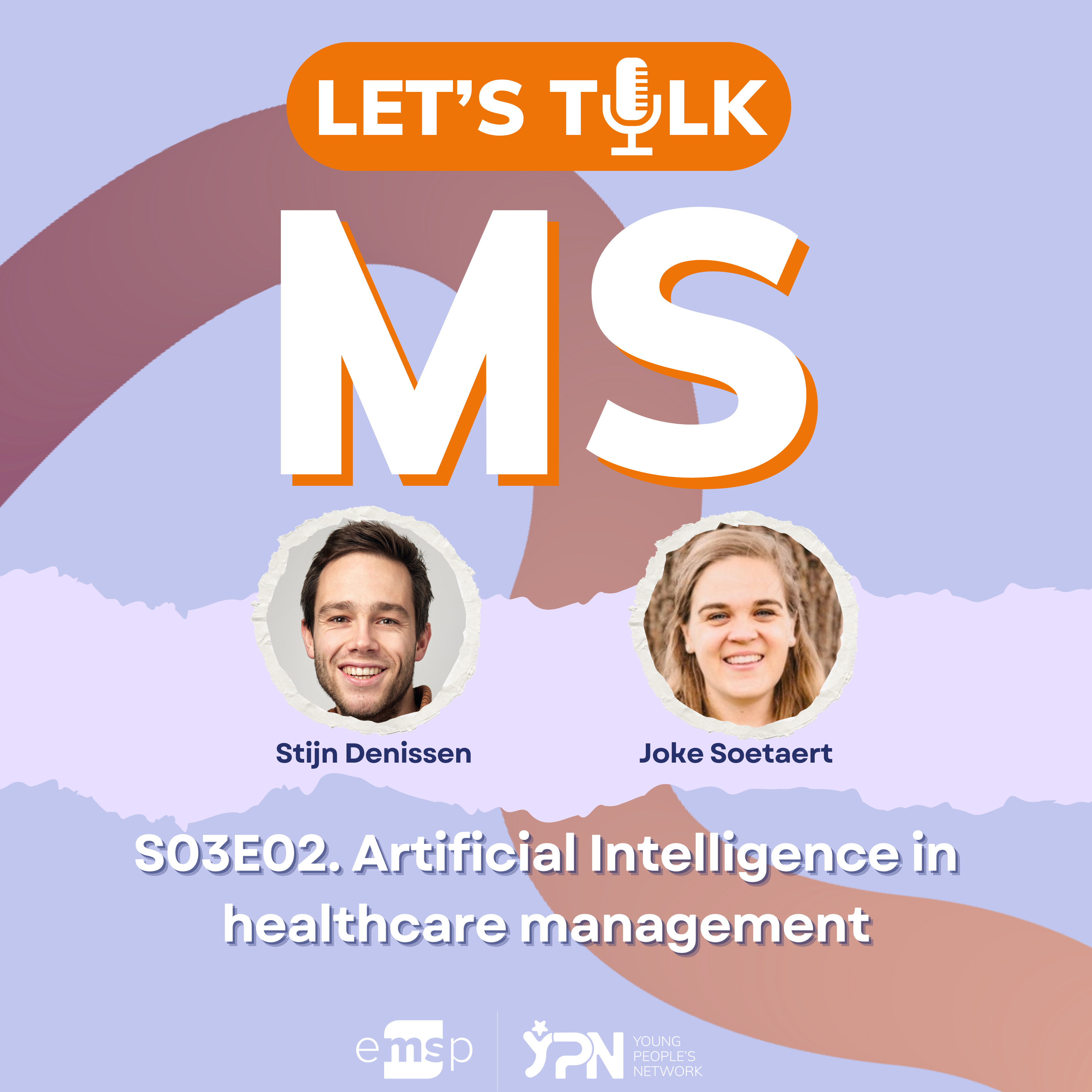
[00:00:50] Speaker C: In today's episode we will talk about a hot topic in this community that is the impact of artificial intelligence in the healthcare management and specific for us in Ms. Management.
[00:01:02] Speaker B: Over the last decade, AI has transformed the way we live, work and interact with the world around us. AI tools have become part of our everyday routines. We use them to ask questions about almost everything, to translate documents and text, write resumes, plan meals, design fitness routines and even manage our finances. In healthcare, the figure of Dr. Google has evolved into Dr. AI and I'm sure that many of us have already turned to an AI tool to at least once in our lives to ask health related questions. Questions seek information about symptoms or better understand our medical condition. But as these tools become increasingly accessible, important questions arise. How can we use AI tools effectively? What are its limitations? How trustworthy is information it provides, and most importantly, is it safe?
[00:01:49] Speaker C: So to discuss those questions very specifically, we have two interesting guests that we are welcoming on board. And thank you very much for taking the time to be on this podcast with us. The first one is Time, who is based in Brussels, who is a physiotherapist by training, but also a researcher. So you will introduce a little bit later more about yourself, Nyoke Tsuta, who is a member of our Young People network at emsp, who is also a midwife and a former leader of the youth network in the Ms. Liga from Flanders. And we are really, really happy to have you today to discuss with us this topic, to hear more from your insights as users, as professionals in the development of the AI tools. To start looking into this topic, we will focus the discussion on what are the opportunities, what are the challenges that people are afraid of or facing. Now that we are in this era of AI, there are still a lot of people that are quite hesitant to step into this era that are still hesitant and afraid about AI, what it means and how it works.
[00:03:00] Speaker B: So to start the conversation, Stan, we Will start with you and quite straightforward to the point. So AI is a often described as revolution in healthcare. So we wanted to ask you from your perspective, what is the most significant impact AI tools have in healthcare management and how does it impact the outcome for patients?
[00:03:17] Speaker A: Yeah, thanks for that question. I think depending on who you will ask it, you will get different answers. One of the things that I think are common when I speak with different healthcare professionals about how they use AI tools now has to do a lot with time management and actually making workflows more efficient to making sure. So now only focusing on the on the healthcare professional side, for example, trying to automate reports that can be written in collaboration with AI, but also there are other procedural workflows actually where AI really can help. This is also a little disclosure that I'm going to give is that I did my PhD in collaboration with iCometrics, it's an image segmentation company. But indeed that's also something that I wanted to mention. I guess the most impact besides textual based assistance of healthcare professionals is also the image analysis. So we see that segmentation is a big thing to actually try to make volumetric estimates of different structures in the brain to see actually how they evolve over time. And their AI is typically very good because they are very good in vision based tasks. And you really see that that was actually one of the earliest things that we saw emerging in Ms. Care basically.
So that's mostly from the healthcare professional side and from the patient perspective. I of course leave that word to because she will be the best in telling you about that. But I kind of have the feeling that in a deed you just mentioned a shift from Dr. Google to Dr. AI and I guess that's kind of where we are now. I guess many people will use it for different things and that's also where the danger lies that people are trying to get additional information that might even conflict also what the caregiver is actually recommending. And I guess we are now just facing maybe a little bit more pressurized discussion compared to a regular search engine that Google used to be.
So I guess that's where we are now. And there are a lot of developments in AI that are basically targeted to which data is available. I guess there is actually more to AI than now meets the eye because some tools are kind of the obvious tools for which you would use AI. And that's I guess why it's so important to have this multidisciplinary discussion and why I'm actually so excited to be on this podcast because it's kind of also in discussion with, with users, with other stakeholders, that we can get to a more balanced discussion.
[00:05:46] Speaker C: I would say, Stein, if I may just pick up on what you just said. In terms of the AI development and relying on the AI information.
We hear a lot that the AI tools needs to be trained to be fit for purpose. Do you think that in this very early stage of the AI development and for the general public to get used to that, do you feel that there is a rush for all the stakehold, the healthcare systems, the different providers into the development of tools, that they brand AI tools because it's trendy, because it's what is there at the moment that could be a dangerous step and that people using untrained AI should be concerned.
[00:06:31] Speaker A: Well, so when you develop an AI, there are certain things that as a developer you need to keep, be very mindful of.
So they sometimes say rubbish in, rubbish out. It's kind of the cliche now in the, in the AI world, which means that if you, if you model on bad data, you cannot really expect miracles to happen. I guess that's, that's logical.
But yeah, indeed AI tools can be biased. They can even be discriminating towards people. So it's very important to actually keep in mind that we model them correctly. And then indeed, if you're talking about a rush and if you talk about trying to be as fast as possible and to be the first one to publish an AI related tool, then yes, those people might also become less mindful of those dangers. And that's kind of the reason why we also should think about acuity in AI research to put data sets as much as possible and to rethink maybe the ethical procedures to do, for example, do public sharing of data, which is often actually a desire of centers to publicly or with restricted access share data, which is kind of key towards training those algorithms and of course respecting the ethical and moral underpinnings of this data sharing. But it's there where the tension field lies between the large volume of data that these systems need to be trained correctly and like what we can actually do at this point and how well we digitalize our data, how well we share it. And yeah, obviously that's where my research also lies, to actually try to rethink this in a way so to actually access more data, to have more generalizable and robust models that do not exhibit those problems.
[00:08:21] Speaker C: How are patients involved in this modeling and where do you feel that there is a possibility to raise more the concerns, the voice of the patients? So that what is developed is actually fit for the needs of the patients. And because you were talking about the trustworthy data about the ethical side of things. But where, how do we know as a user that every point has been checked and that how can we signpost to the right tools or the strongest tools? Is there something that you could recommend?
[00:08:54] Speaker A: Yeah, I think we need to surf along the kind of trend that we've been observing for the last years that medicine is leaving for the good. The more paternalistic view of doctor knows best and doctor presents treatment to patients, but rather that it's like a conversation, you know, that it's a shared decision making.
You are in that together and you're actually in conversation getting to the best possible outcome for the patient or the person with Ms. And in that regard I want to stress that the same trend should be there in AI, but people with Ms. Should find their way towards the discussion platform about AI. And I guess that's kind of where I'm going. Hopefully it's justified to make a little bit of advertisement for the community that we've established there. It's the international community for AI and Ms. Where we actually really try to involve people with Ms.
In this conversation. So Joke gave earlier this year she gave a journal club on actually the patient perspective on AI. And I guess it's because with these kind of conversations that we really understand what the concerns of people with msr where the real challenges lie, where the opportunities also lie. But yeah, I just think that at this moment this conversation has not been structured enough and that's I guess also a trend where Actriums is starting to invest in to just mention Actrims as a conference that they also try to make this AI discussion more on stage. Well actually rather not on stage but on the conversation table to just have an open discussion about what can happen and that people with Ms. Also also understand the challenges that are there when developing such an AI system. But also the other way around that developers understand what they are actually modeling for rather than just the engineering mindset which is often can we do it?
We should also ask ourselves, should we do it?
[00:11:01] Speaker C: Thank you. And then we can turn to Yuki, as we said about the patient voice and your perspective there, can you tell us more maybe a little bit about what AIs brought for you as a patient and how is it that it has changed your way of managing your condition or interacting with your healthcare professionals?
[00:11:20] Speaker D: Well, I started using ChatGPT like about two years ago and now I use it on a daily basis and it Saves me a huge amount of time. I feel that I know much more about a much broader range of topics because I can quickly look things up, including random topics that I probably wouldn't have searched for on Google.
And what I really like is that the information is adapted to what I already know. For example, because ChatGPT knows I have a medical background, it can use medical terminology and it gives me more in depth information without me having to start from the basics.
So I also use it to check the current state of scientific literature, to organize my thoughts and to get inspiration. But I always try to remain critical, just as I would with any information I find online.
And AI gives me a real sense of support in managing my condition. I use it for very practical things, for example, to get exercise advice like Anna said, or tips to improve my sleep, but also for psychological support. I'm currently working with some psychological techniques and AI has helped me understand them better. Sometimes I describe a specific situation that caused me stress and I ask how I could deal with it in a more helpful way.
And it has also greatly increased my knowledge about ms, like I said, and it helps me feel more empowered and allows me to have more informed conversations with my Ms. Team.
But AI certainly doesn't replace healthcare professionals. It helps me get more out of the interaction with them.
[00:13:06] Speaker C: That's a really important thing, I think. Anna, we were discussing that a bit earlier, but the importance of the human touch, should I say, and the human interaction. So maybe Edna, you want to. Yes, speak up on this.
[00:13:19] Speaker B: It's interesting to hear you Joker, because I feel a bit as dynamic and I'm a special myself. So sometimes I also use AI for asking questions that probably sometimes I know that I shouldn't use. But then this is the reality, it's our new reality, so we need to
[00:13:34] Speaker C: adapt and accept it.
[00:13:35] Speaker B: So Joker, do you feel a bit concerned of the information you receive or have you ever received information from ChatGPT that it's not accurate or that might mislead you? Like what? How do you identify the red flags when ChatGPT answers you to know which information is trusty or not?
[00:13:54] Speaker D: Yes, there are definitely a lot of red flags. I think you have to remain critical all the time and I don't know if that has a lot to do with using the free version, Stan, but AI can definitely make mistakes sometimes, even with things that seem very simple. For example, I once asked how many Saturdays there were between two specific dates and I got the answer wrong, wrong by one day. And I was honestly quite frustrated, especially because I felt that the mistake was being minimized by ChatGPT and that made me realize that even when something seems very straightforward, you still have to check it. For me it's a bit like using Google, but much faster. And also you can ask follow up questions and keep refining your search until you get the information you need. But the important difference is that, that if you know very little about a subject, it can be difficult to recognize whether the answer is actually correct.
[00:14:55] Speaker B: I think that's a good answer and we need to pay attention to the information we receive and if it helps for someone that is listening to us. My own rule when I look for information on ChatGPT or Gemini is that I try to ask questions that are less important. I mean that if it's something that I know that it can have a direct impact on my health or on my state, like, or mental health. I mean that if it's a really big important question related to my ms, like if I have these results of the blood test, am I able to keep with this medication? No, I will not ask this. But then for example, it's like I got my results of the brain scans, like I don't know anything. I mean they tell me you're stable, fine, but what does this specific question mean? And that helps me to better understand the condition. I think it's like permit has been useful so long to filter the information that I'm asking to these AI tools. So I think Elizabeth was mentioning the loss of human touch. I don't know how both of you feel about this. Are you concerned that we lose this connection between healthcare professionals and patients when we are using those AI tools?
[00:16:00] Speaker A: So first of all, before I answer that, I really just wanted to pick in on one thing that I heard before that was about yeah, do you get the right answer from allm? So a large language model, that is obviously a very difficult question if you don't know the ground truth. And then if we are talking about the ground truth that is actually exactly where this is the professional kicks in. I mean a professional, it's very difficult to say because why do you trust a professional? Probably because they can give you some certification. They can say okay, I studied for X years to become a doctor. I did this on verified books that were based on evidence based medicine and I did my internships. So they can actually justify why they know and, and trustworthiness in an LLM I think is a bit more complicated because they saw a lot of things online, they saw a bunch of information and it's not Always clear cut, whether that is right or wrong, whether a blog that someone just wrote is actually the truth or not.
And basically what you might get is that you get a more plausible response than is actually justified. You know, that it's actually more delicate or it's more complicated. But what of course LLMs try to do is there was an interesting study, I guess a couple of actually very recently being published as a preprint where people become three times more confident, what was it, two times more confident. But they were three times as likely to be wrong at a certain task if they used AI. So kind of LLMs can also make you feel very confident. They will also never say I don't know. That is also, I think a real problem. An LLM should be able to say I don't know. Because a doctor says that, that I don't know sometimes has reached the end of the evidence, says I don't know. This is probably what, what we can try and then outlining very clearly with you, these are the benefits I see, these are the risks I see. And based on this whole, and the evidence, based on what you want, I would suggest that we do this. And I have the feeling that we aren't there yet with LLM tools. And that's why that human touch is so important. It's actually to, to call bullshit sometimes to say no, this is not right. And then of course, I mean people can also not be right. But I have the feeling that that should be a very important thing that people are allowed and actually can say that they don't know or that they are plain wrong, that they've been plain wrong. That's also an honesty aspect that needs to be there if you want to do proper medicine.
[00:18:44] Speaker C: But would that be also the responsibility of the developers or the people, the companies that are putting those AI tools at disposal to come up with a disclaimer and a warning for people. Yeah, because this is, this is what is selling at the moment.
And it's, it's very much about how transparent can you be so that you don't get a patient to trust something that is wrong. I mean it was the same when Google came up, right. We had this same discussion. And now with AI, people are like almost certain and specifically not to point the finger, but the younger generation, they're all about AI and all about finding easy solutions and answers online, which is fine, which is the case, but there are some limitations. So wouldn't that be the responsibilities of the developers and the companies to come up with a warning?
[00:19:39] Speaker A: Yes, of Course, well, the developers are the one that put it out there for you to use.
I always hope that they have the best interest in mind. So actually to improve that. And in that sense, yes, it will be, will be their responsibility.
The only question there is how feasible is it for them to throw a warning at the correct time. Because if you don't know the ground truth, if you don't know when something is right or wrong, then it's sometimes difficult to say exactly when it is justified to have a disclaimer. Of course, it's maybe simpler if you would like, for example, right now you have a little disclaimer, be careful with code. Because sometimes you. Well, encoding AI is a very helpful tool. It also helps me a lot to code something very quickly. For example, to build a website or whatever.
It's now so easy.
But they also give disclaimers that they can also be wrong, that it can also harm your system. So in that sense that can be related.
But yeah, for me, it's just not clear yet how that then would look like for a developer. What is then the concrete requirement that you ask from a developer just to make sure that your AI has this robustness? And I guess there again comes the conversation. It has to do with understanding the needs of doctors, how doctors operate, how patients are involved in this process, and how we can make sure that that workflow is helpful and not harmful.
[00:21:12] Speaker C: Is that something that is done that having conversational consultations with this group of experts in terms of developing tools, do you feel that that's done enough?
[00:21:24] Speaker A: Well, if I, if I look at academic contexts, then I have the feeling that, that it's often right. Well, how it used to be or how it has been evolving is, hey, we have this data set, a clinical data set or an RCT that was published and now maybe we can actually predict the treatment response because we have that data. We can actually use AI and we're going to try to build a model to predict this treatment response.
And in that regard it will probably be maybe the researchers involved in that trial and then some engineers and some computer scientists that actually are on the project and then together try to build that.
And that's again me advocating for having a platform where people with Ms. Find their way towards being involved in this discussion. It's not only people with ms, but also legal stakeholders, ethicists, that we can come up with some guidelines to make sure that these tools can also reach practice and that they can and reach practice in a safe way.
[00:22:26] Speaker C: I would say, as a Ms. Patient, do you feel that you are empowered enough and you have enough information to be part of this type of discussion or what would be missing, what you recommend in terms of practical tools to equip the people to be part of these discussions.
[00:22:44] Speaker D: I think first of all it's important to have some knowledge about ms, because otherwise you cannot see if things are correct or not, or are good or not.
So I think that's most important for that. I'm directly thinking of a project we have in Belgium. We have patient experts in ms, so educated people with Ms.
So that's maybe a group that is fitted to do that. I don't know how that is in other countries.
Yeah, I think that's the most important. And then second of all, you also need some experience with AI, how it works, what you can do. And I think for that we need the AI professionals to guide us.
[00:23:27] Speaker A: It's an interesting point that you raised there, as well as having a minimal understanding of AI. And I think let's maybe zoom in on that one because that's for me more of a societal problem. And of course this is with all tech. I mean, this also happened, I think with the calculator and with all tech that has been introduced in our society, suddenly it is there and then we're going to figure out how to regulate it. And so it's not rocket science that we see the same here. But I do believe in some kind of basic AI liter that is just a part of a core curriculum for anyone because AI will be used by anyone across the globe. So for me it makes sense that everyone has at least a basic understanding of what we are dealing with here. And I don't have the feeling that we also see that often that artificial intelligence, machine learning, they are kind of used interchangeably. Many terms are not perhaps very well known what the boundaries of these terms are and what the implications.
And that also gives you, I guess, knowledge will be, or an education will be key towards people having a justified sense of trust in the tool that they're using.
[00:24:37] Speaker B: I think that's key. What you are mentioning like the AI literacy and to have more information on this and that makes me think about the data.
We don't know that much as a user. We don't know who owns the data or what the possible use of our data that we are sharing to those bots. So how can we deal with this or which information should we avoid sharing
[00:24:59] Speaker A: that data discussion has also been going on for a long time. Of course I know that even there were at a certain point People were philosophizing whether there should be like data pods so that there is a. For you as a person with msu, you have your data within this well defined pot and you can actually choose to share that, for example, with a company so that you have ownership for it yourself. You know where it lives, you know who you give access to that data.
So yeah, I guess still judging from good clinical practice and good research practice, I think it is our responsibility and also our moral obligation to make sure that especially persons with Ms. On which data we are allowed to model because we should be grateful that we can be involved in helping everyone by having access to this data.
Then I think it's also our moral obligation to indeed make sure that we communicate this as well to person people with Ms. Like, okay, this is where your data resides. And of course there are are protocols, especially in clinical trials where this data can be stored, how it should be stored, anonymized, pseudonymized, how this can be transferred to other clinical centers if there are data sharing procedures. But indeed it can become blurry very quickly, especially when people are giving data themselves to chatbots.
And then I do agree that chatbots can be very good for information and kind of informing people. But there is kind of a risk if you start explaining because you want an as accurate as possible answer. So you reason, okay, so what if I just provide any possible information that I have, Maybe I should upload my mri, maybe I should. I mean this is really tricky practice that you really should not do that just to get a better answer. And that's also why we should think about, about this data problem that you, that you mentioned is really a big one because then it will become blurry. And of course there are a specified set of big tech players that are then at the disposal of that data and that can also give them an unfair advantage with in the wrong hands can also be used adversely.
[00:27:09] Speaker C: That's a very good point that you're mentioning, Simon. I just wanted to pick up quickly on this, is that you said don't upload your medical data on an open chatbot or whatever. And I think that's something that people is to be reminded of because in the flow it's so easy. You open your computer, you're sitting there, you feel you're at home and safe and just sharing with your computer, but you're sharing with the world and that we can't say that enough just to be careful on what you're putting online, even through an online chat, that is being your friend, an AI Friend, but still it's owned by someone else. And that we have to be very, very careful on what we are doing and on that, that and also from y perspective, do you guys have any tips for the people to use this AI tools that are at disposal very easily, for free, on a safer way and in a way that really keeps people safeguarded?
[00:28:04] Speaker D: Well, I would say first of all, stay curious and try to build as much knowledge as you can about your condition. And if you're interested in using AI, just give it a try, try. But I would also say stay very critical. Give the AI enough context to understand who you are, but just save context. Of course, like you said, what you already know about the subject and what your goals and needs are and the more relevant information you can provide, the more useful and personalized the answers can become.
You can use it for very practical things like getting ideas for exercise, managing stress, improving your sleep, or preparing a list of questions before a medical consultation.
But for me, AI is a tool to support you and make you more informed and not something that should replace your own judgments or your healthcare professionals. I was also very glad that Stain highlighted his perspective as a researcher that they are very concerned about the data and the data privacy. A few months ago, as a preparation for the journal journal clip Stain mentions, I did a survey among 93 people with Ms. In Belgium and more than half were concerned about the privacy of their medical data. So it's definitely an important thing that we have to think about.
[00:29:27] Speaker A: We should remind ourselves in this regard that knowledge reduces anxiety as well. Things should just be clear. We should just know like. And that's why I again advocate good for that discussion, just that we have proper documentation that people understand like, okay, this is where my data lives. This is where, this is where I can consult it. This is how I can also get it offline. Again, that's I guess a very important premise. And just coming back to like concrete tips. I think yoga has said it all. It's about facilitating. There was also, I guess a couple of weeks back there was this YouTuber that also publicly announced that he had had some difficulties struggling with some things like YouTub asset was that I think. And then there was also again the discussion because he said like, okay, I've been using an LLM which has helped me to actually manage this. But then there were also concerns it can be dangerous because for example, there was a study that neurologists are being perceived less empathetic as LLMs, which is kind of harsh, but it's true. LLMs will sometimes make you maybe feel overly confident or make you happy while. While maybe, maybe the really the tough things should be said. And then a healthcare professional might say something that you don't want to hear, but you actually should hear. I really think that we should just be as a community, be mindful of not of using AI for the good, making sure that it helps us and that it's not starting to compete with us.
[00:30:57] Speaker B: I think that's a good message. And just my last question, Would you recommend any specific AI tools that are not like the most famous word, like the most known ones for like patients with ms, that might help them with managing the condition?
[00:31:11] Speaker A: So many of the research tools, and that's maybe part of the, of the problem, are not directly actually being translated in clinical practice. They then are shown to be feasible and that they might work, but that's not always yet there. I think the. Of course the number one thing is large language models. Why? Because they are so. Well they can be used very widely. So they are not very specific to one specific problem. And then of course other tools they are put at the position disposal of the healthcare professional, not the person with Ms. So I think it's not bad to play around a bit with how a chatbot can help you, but then please also be involved in thinking about other ways how AI can actually assist you. And that's I guess like the other direction. We should understand what the needs are and then actually try to model based on those needs. Needs.
I mean the data. Of course as a researcher I'm very biased, but I think it's still relevant to put your data at the disposal of research. It should be safe. And that's also our responsibility partly to make sure that this is safe, but it will make sure that specific AI tools can also flourish and that we have sufficient data to actually do something meaningful. We should also always ask ourselves why? And we should start from the why and only then start thinking about how should we make this.
[00:32:36] Speaker B: Thank you Stein for your answer. And we'll stay tuned for the new possible tools that might come up in the near future. And before we finish, we have prepared a short game. So it's quite easy. It's one word, one sentence. So I will start a sentence and then you need to finish it.
[00:32:50] Speaker C: Okay.
[00:32:51] Speaker B: So maybe just to not overlap. Okay. If you want to go first and then stain, that's perfect. So the first one is when I think about AI, I think of what
[00:33:01] Speaker D: I want want that AI can do is that it can see things that my doctor might not see. But I also want my doctor to continue seeing things that AI could never see. So that's important because we have to increase the trust in AI for in healthcare I think perfect.
[00:33:20] Speaker C: Perfect.
[00:33:21] Speaker A: So the question was when I think of AI, I think of one word.
[00:33:26] Speaker B: It has to be short.
[00:33:28] Speaker C: Okay.
[00:33:29] Speaker A: Opportunity.
So I, I see, I see balanced opportunity. I really see how it can help us. I do think that it needs to be structured in a better way so that there is that the conversation around it that AI can really just be. I mean there are so many possibilities. Yeah. I also think that we should in that regard start small. Always start small. If we want to build, think about like the minimal viable AI tool that we can use to fix a very small part of the decision making process. For example, that can already be very helpful. But sometimes of course the big research funding comes from saying yes, we can predict the treatment response of people with Ms. Based on your individual profile.
That is a very big promise.
So I guess also like starting small, like try to gradually build this.
[00:34:23] Speaker B: Start a small. It's a good advice in many parts of life. So next question. Question is AI has a potential to help patients buy.
[00:34:31] Speaker D: Buy everything. I think almost everything.
[00:34:34] Speaker B: That's good answer.
[00:34:35] Speaker D: And that's a short answer.
[00:34:37] Speaker C: That's a short, really short. Thank you.
[00:34:39] Speaker A: I would say understanding this point, understand the disease.
[00:34:43] Speaker B: Perfect. And last one, just to talk about a bit about the future. In 10 years I hope AI in healthcare will. It's more difficult maybe.
[00:34:52] Speaker A: Yeah.
Assist.
Just if we kind of wrap up what we've been, what I've been advocating, I hope it can really assist us so that we, that we know exactly how we should use it. That different people's needs. That's what I would have really see in a clinical routine.
[00:35:11] Speaker D: I hope in like 10 years AI will be used by a lot of people, also people with ms, but also a lot of healthcare professionals.
And I think that's really the future. It can make us a lot smarter and give us a lot more precision medicine, tailored medicine. And it can be.
It's so promising, I think.
[00:35:37] Speaker C: Thank you for your inputs and for your time. Also today. It's very, it was very nice to have you. This is a topic we can keep talking for hours. I guess AI is here and it's. There is no going back. I believe that this is the future and that we have to embrace this future. And it's nice to see that experts are involved and that patients are eager to learn from. What I learned from this discussion today is really that there is a need for the AI literacy, as you were saying, Stein, is really important and essential that will bring the whole community into learning more about what it is and how they can use it and what are the challenges or the risk that they need to manage in a way and for that good education on AI is important and probably a bit of responsibilities of us as being an organization to support our community in this field.
But I also hear that there is still a need for continuous discussion and dialogue between the developers, between the patients community, the healthcare professionals, and that the whole ecosystem gets involved in producing good AI tools that are fit for purpose and that address all those risks that we have been discussing to be trustworthy, to have sufficient data to understand the real unmet needs of the community and that this data is kept in a safe way or collected in a safe and reliable way. And I cannot state enough this diversity and inclusion so that everyone can share the relevant data to provide and to have a tool that is really taking into account everything and at the end to provide meaningful, solid support for the patients on the long term. That's really what we are aiming for and we know that at the moment the research tool again as you were saying, are not really translated in clinical practice yet. But it's this moment that we need to use to make sure that the patient's voice are heard and that we find the forums to do so. So we will also share a little bit more about your community online that you are building about it on AI, the international community for AI. I think that would be important for people to learn a little bit more. What's the mission of that community and how they can get get involved. So thank you very much for being here, both of you and sharing your personal insights.
[00:38:01] Speaker D: Thank you for having us.
[00:38:03] Speaker A: Thanks indeed. Thanks for the lovely discussion.
[00:38:06] Speaker B: To finish, I would like to highlight one sentence that joke mentioned that I really like. So AI is here to support us, but it doesn't replace our judgment or our healthcare professionals. So I think it's a good ending to our episode and if you enjoyed this episode, please please share it with your peers, friends and family. Don't forget to subscribe to our podcast channel to stay updated on upcoming episodes. And in our next episode we will be talking about biosimilars, another important topic for the community. You can follow us on Instagram and Twitter @UMSU. Thank you so much for listening today and until next time,
[00:38:47] Speaker A: Sam.